Interstellar
Interstellar is Stratum’s experimental lab, a space for ongoing explorations into how rugs can move beyond the floor.
Here, materials are tested, constructions are rethought, and familiar ideas are approached from new perspectives. Each study begins as a question about light, texture, structure, or form, and evolves through process, iteration, and observation.
Together, they reflect an ongoing pursuit to expand how rugs are designed, experienced, and understood within space.
LUMINATI
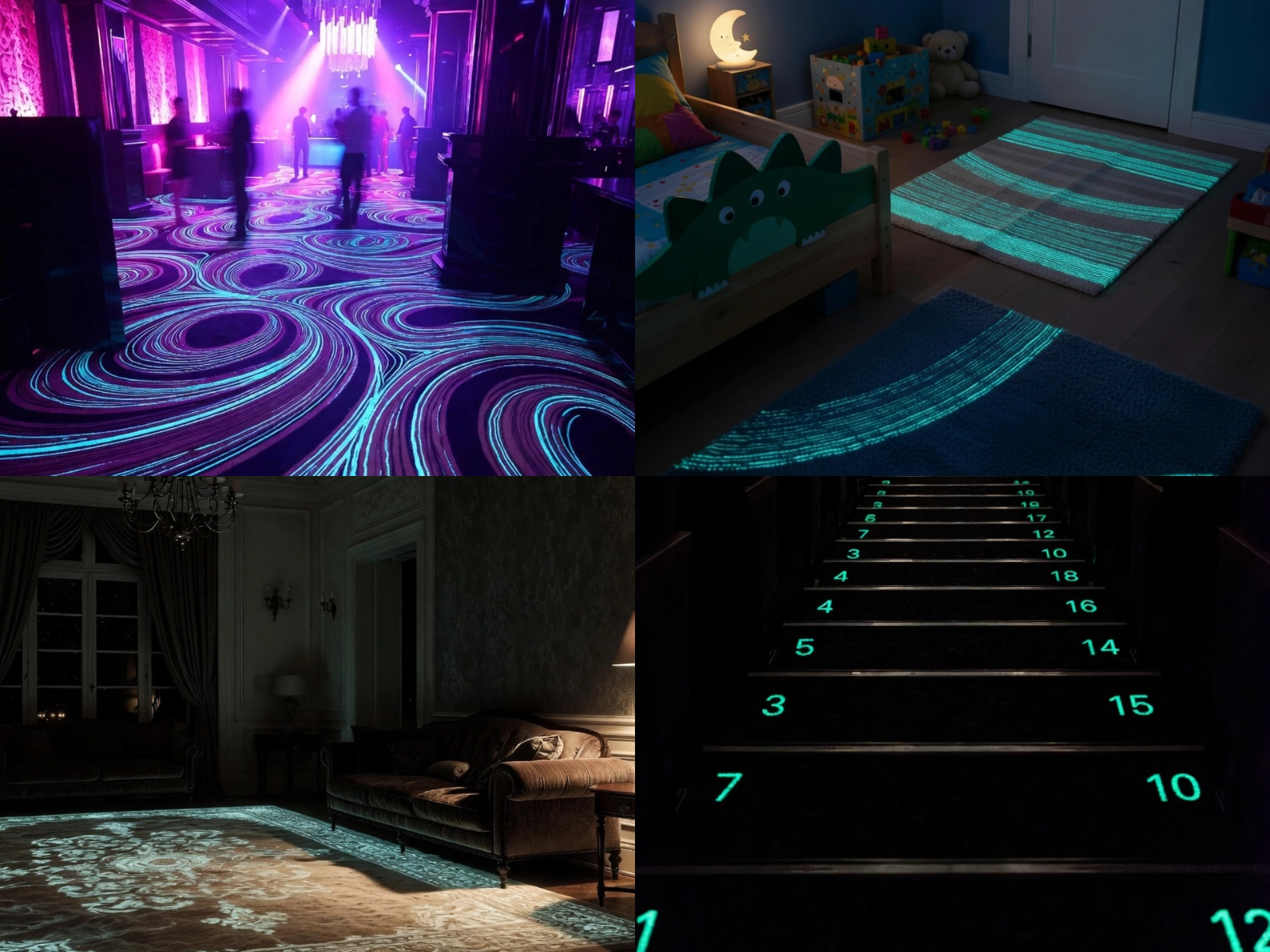
LUMINATI explores the idea of light as something embedded within material rather than applied to it. Using glow-in-the-dark yarns, the surface absorbs ambient light through the day and gradually releases it as the surroundings dim, creating a soft, atmospheric presence.
The shift is subtle and unfolds over time, changing not just how the rug appears, but how the space itself is experienced.
Where it could extend
Within environments that benefit from a more immersive, light responsive experience, these pieces adapt as the surroundings shift. From lounges, nightclubs, and entertainment venues where the surface reveals itself as lighting changes, to children’s rooms and residential spaces where it introduces a softer sense of comfort in low light.
It can also extend into cinemas, gaming zones, and hospitality corridors, as well as experiential retail and installations where subtle, responsive surfaces enhance the overall atmosphere.
RUG WAFERS
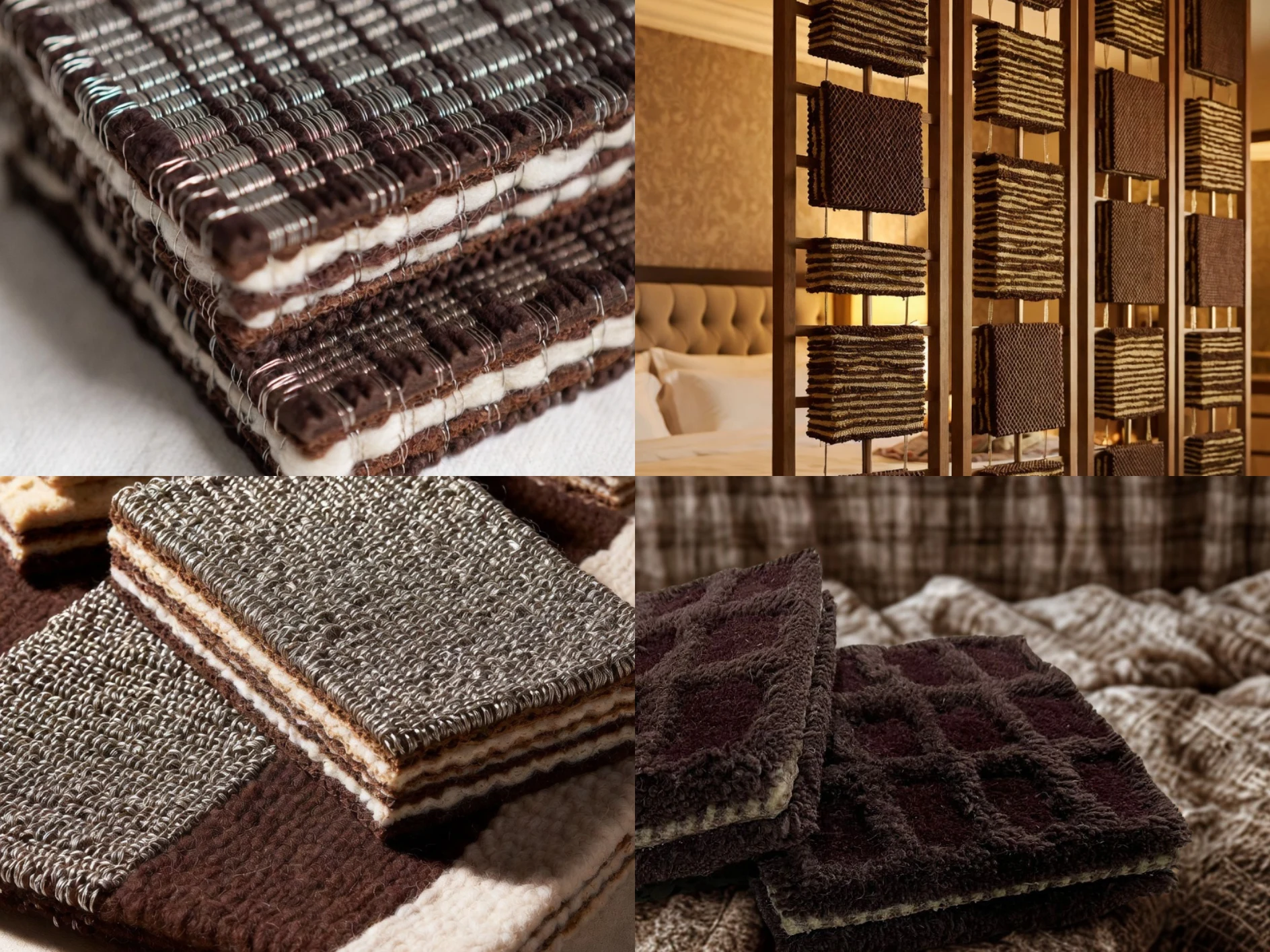
Rug Wafers explore what happens when metal wires are introduced into rug construction.
Built as layered compositions of yarn and metal, these pieces bring together softness and structure in a way that is both tactile and visually distinct. Each layer is intentionally arranged to highlight how different materials interact, revealing variations in texture, density, and form.
The name draws from their form. Composed in thin, stacked layers, each piece resembles a wafer-like structure, offering a sectional view into the rug rather than a single finished surface. What appears familiar at first glance becomes a way to understand construction more closely, through layers that can be seen, handled, and explored.
Where it could extend
From acoustic surfaces in workspaces and hospitality environments to modular wall elements and material libraries, these studies open up possibilities beyond the floor, inviting more tactile and spatial applications.